Powered by the experts who built







































Fully Operational Team

Lea Dudum
Chief Financial Officer,
 Alumni

Bryan Kelley
Director,
 Alumni
Kfir Raiby
Data Scientist,
 Alumni

Jason Purdy
Product Lead,
 Alumni

Eric Kovalkoski
Director of Growth, Digital
 Alumni

Ismail Maiyegun
Chairman/CEO,
 Alumni

Eric Seufert
CEO
 Alumni

Brian Sapp
Head of Growth
 Alumni

Jason Parmar
Head of gaming UK + Nordic
 Alumni

Aurelie Guerrieri
Chief Marketing Officer,
 Alumni

Kyle Shields
Growth Creative Lead (Art Director),
 Alumni

Steve Wu
Product Lead,
 Alumni

Brett Fischler
Engineering Manager,
 Alumni

David Diaz
Co-Founder & CEO,
 Alumni

Atif Khan
VP of Business
 Alumni
Brandon Fuller
Co-Founder + Chief Creative Officer
 Alumni

Doug Thielen
Senior Director, Global Brand and Product Marketing
 Alumni

Matthew Snow
Head of Product Design,
 Alumni

Hilary Self
Founder
 Alumni

Jeremy Leal
Head of Sales and Marketing
 Alumni

Jeet Niyogi
Chief Marketing Officer
 Alumni

Michael Tich
Co-founder
 Alumni
170+ skilled growth
specialists.
MAVAN brings the leadership and hands-on expertise to guide your growth — adapting every tactic and channel as your needs evolve.
Get a
seasoned
growth team
in days,
not months.
It’s almost like we’ve always been here. MAVAN fully embeds into your business, shares regular updates, and helps strengthen your internal growth muscle.


What To Expect

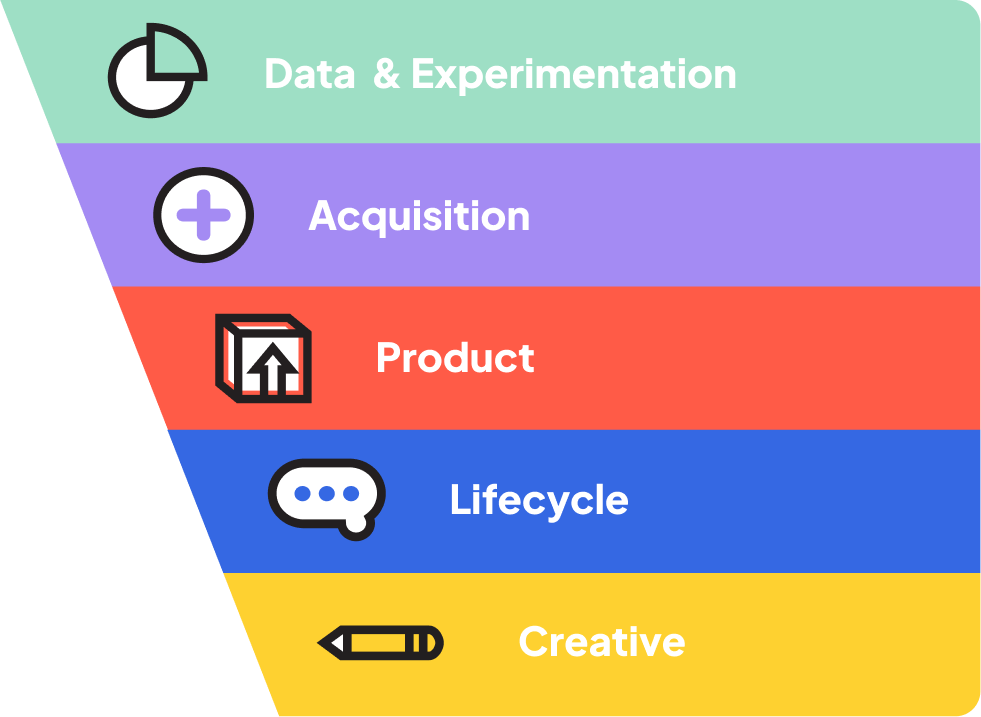
360 Evaluation
We audit everything — from conversion to PMF.

Holistic
Growth Strategy
We build and align on a strategy to fit your model, product, and market.

Rigorous
Testing
We keep you in the loop as we execute a range of strategies.

Results Review & Tuning
We track, update, and optimize and repeat.
See the
impact
behind the
logos
“Working with MAVAN was incredible, the team is well organized and deep
with talent of all forms.”
 "It truly felt like MAVAN was a part of our in-house team. They were collaborative, responsive, and dialed in to our goals. MAVAN quickly drove results that cut our customer acquisition costs by 60%."
 "MAVAN was instrumental in getting our venture ready for launch. They worked fast and kept us in the loop every step of the way. In just 90 days, the team at MAVAN validated, built, and launched our product into market."
 “MAVAN was like having a top-tier growth team on demand. As a team of one, I could tap into the right experts for whatever problem I was tackling. Their model—specialists led by a single point of contact—made the work seamless and high-quality. And unlike a lot of agencies where strategy just lives in a deck, MAVAN actually executed.”
 "Working with MAVAN gave us access to deep expertise in growth. They helped us identify which markets to target, how to optimize customer value, and where to efficiently find scale. This partnership directly led to better campaign performance while scaling our growth significantly."
 “Within months, MAVAN scaled our Search spend to a high six-figure monthly budget, maintaining efficiency consistently for nearly a year. After we had proven the channel with MAVAN, we were able to confidently transition the program to our in-house team.”

Growth insights from experts
Growth@Scale
Podcast