
Working in user acquisition can feel like you’re trying to navigate an ever-changing maze. One common pitfall is to adopt a one-size-fits-all solution for your marketing strategy. In the latest episode of Growth@Scale, Matt Widdoes talks about adapting user acquisition strategies to a changing landscape with Ed Lee, a growth expert formerly at Digit.
Just because a campaign crushes it in one market, or on a certain operating system, that doesn’t mean it will work everywhere. Every audience is different and your approach should be, too.
Post IDFA, a lot has changed and it seems like we’re returning to an age of brand building. This is because we’re currently in a world where trying to figure out who your users are is like solving a Rubik’s cube. Having a solid, trustworthy brand can be a game changer, so it’s okay to go a little old school with your marketing tactics.
When it comes to algorithms, we can all agree that they’re a handy, useful tool, but by no means should they be handling all the work. It’s important to stay hands-on, especially when it comes to campaign design. Creativity and the human touch can outshine any algorithm, helping you reach new users without breaking the bank.
In our digital age, don’t forget the human factor. Marrying traditional marketing wisdom with modern user acquisition strategies is always a recipe for success.
Listen now or read the transcript.
Book a complimentary consultation with one of our experts
to learn how MAVAN can help your business grow.
Want more growth insights?
Thank you! form is submitted
[hubspot type=”form” portal=”20951211″ id=”9c538ed2-fb12-45f1-a573-ad7953c058cc”]
Related Content
-
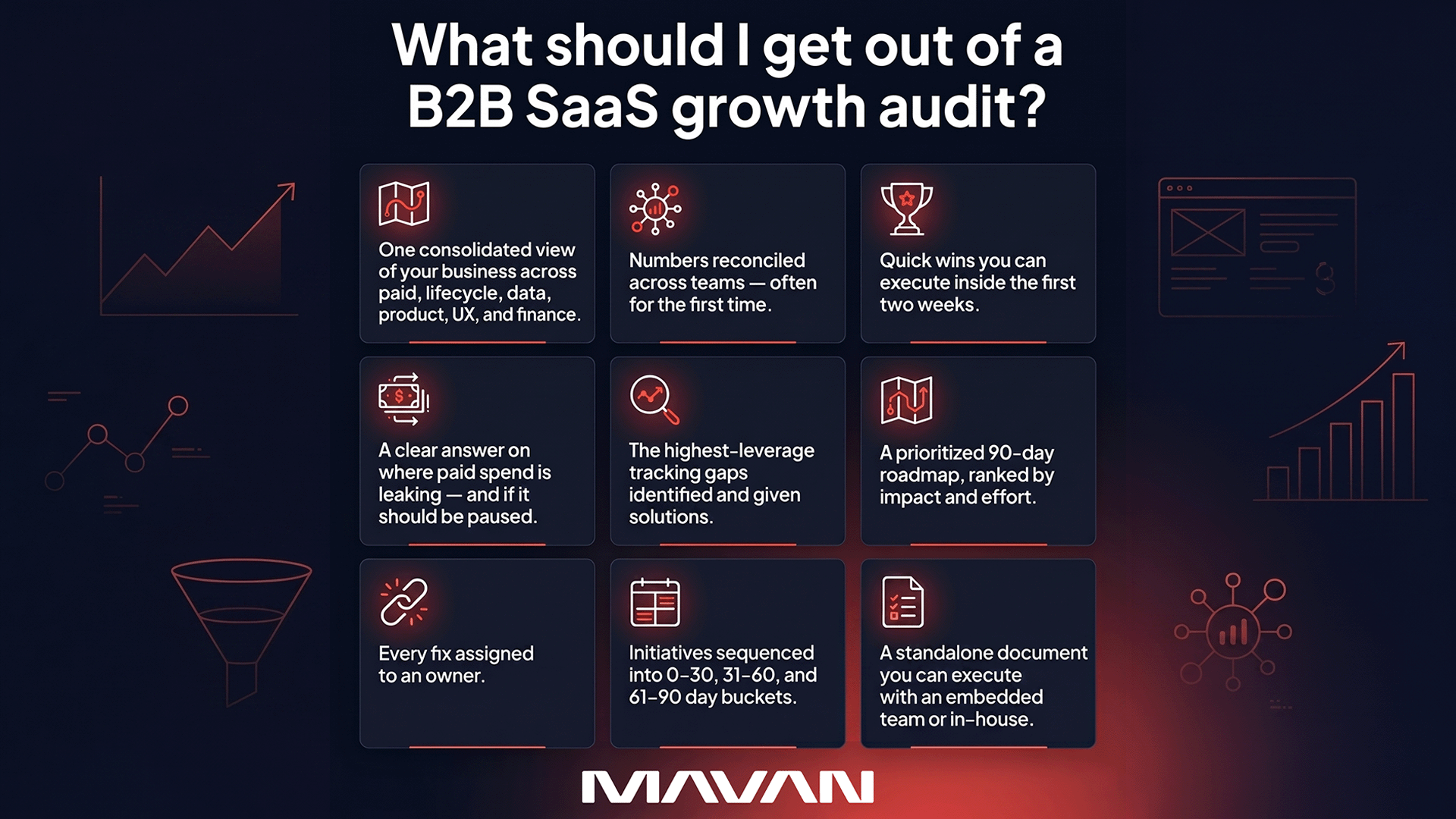
What Happens in the First 30 Days of a B2B SaaS Growth Audit?
The first 30 days of a MAVAN growth audit delivers three things. First, a single, consolidated view of your business — data, paid, lifecycle, product, and finance — written down in one place and reconciled across teams, often for the first time. Second, the quick wins your team can execute in week two without waiting: pausing the paid waste, fixing the highest-leverage tracking gap, and getting the silos in one room. Third, a prioritized 90-day roadmap, with action items scored and assigned, that sequences exactly what to do first, second, and third — with or without us.
-
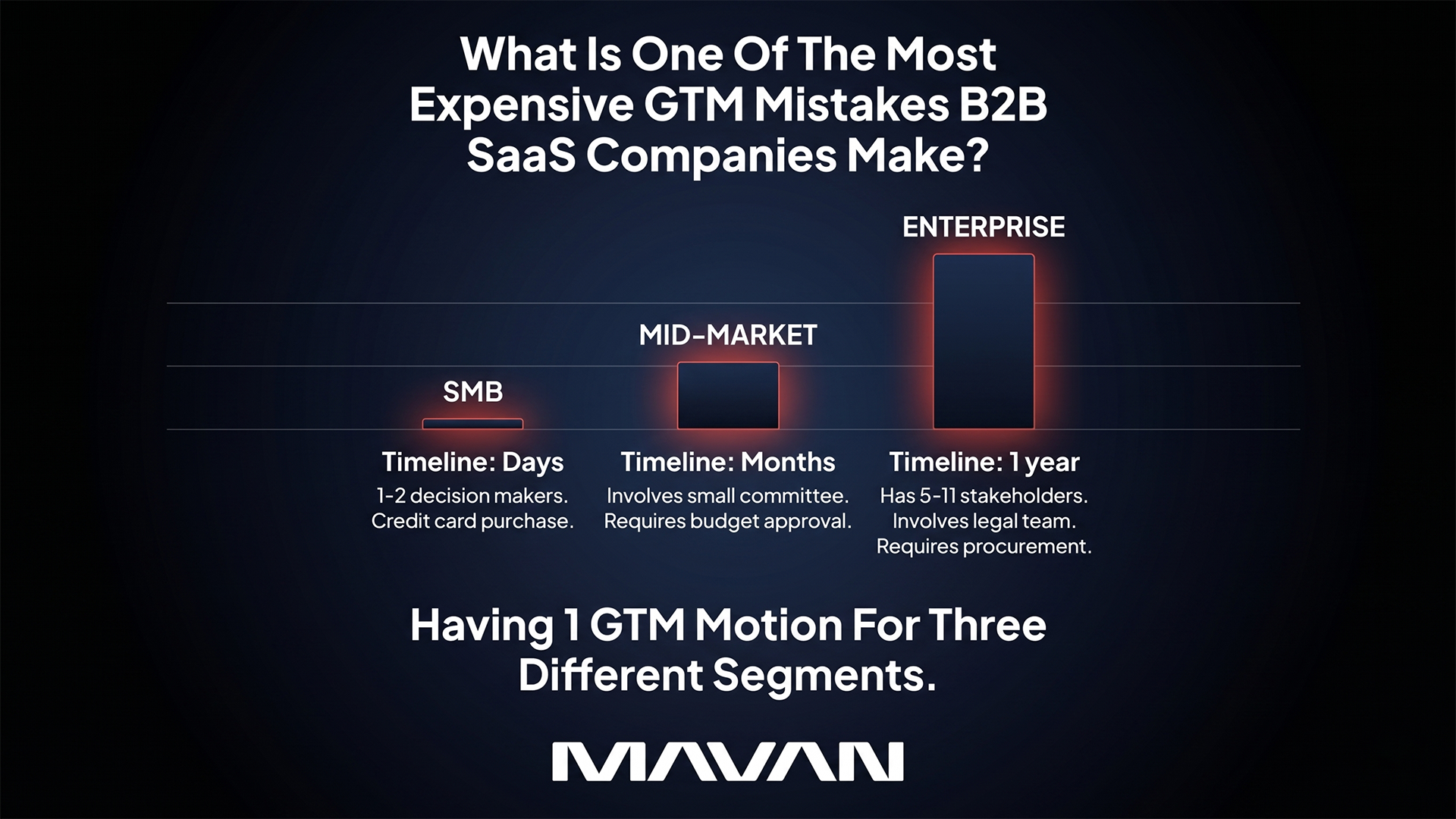
1 GTM Motion Is The Biggest Mistake B2B SaaS Companies Make
One go-to-market motion cannot serve SMB, mid-market, and enterprise at once — their decision timelines, buying committees, and budget scrutiny are fundamentally different. Run product-led growth for SMB, sales-assist for mid-market, and account-based marketing for enterprise as three coordinated motions inside one company.
-
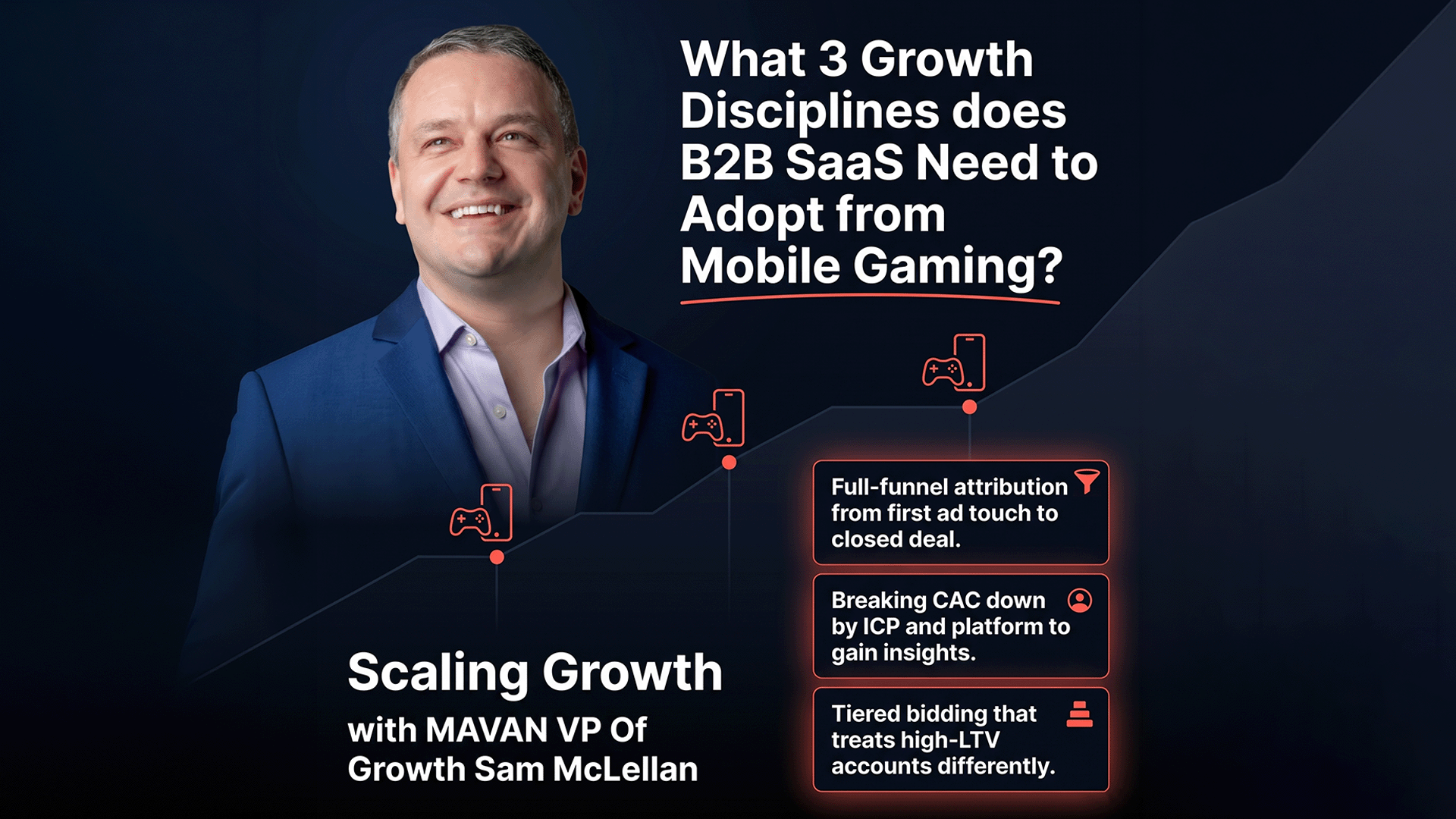
What Can B2B SaaS Learn About CAC, Attribution, And The First Growth Hire (From Mobile Gaming)?
Mobile gaming teams have operated with granular attribution, segmented CAC, and whale-tier bidding for over a decade. B2B SaaS companies adopting the same three disciplines see clearer unit economics, faster optimization, and fewer wasted first growth hires.