
Successful mobile gaming companies rely on a foundation of cross-functional collaboration, continuous learning, and adaptable strategies. As the industry continues to evolve, growth leaders must embrace emerging trends to foster future innovators.
Key Insights
- Cross-functional collaboration is crucial in driving growth success in gaming
- Inside emerging trends and future predictions for the mobile gaming industry
- Key qualities considerations when investing in early-stage gaming startups
Cross-Functional Collaboration = Growth
Creating a unified and collaborative team environment is one of the keys to success in the mobile gaming industry. In the same way that nurturing a plant requires careful attention to various elements like soil and water, fostering gaming company growth involves striking a balance of team dynamics and shared objectives. By bringing functions like product management and user acquisition into the same room, your team can better understand each other’s complexities and challenges, especially when dealing with live-ops and rapidly changing market dynamics.
The Future of Mobile Gaming
Staying ahead of industry trends is paramount as mobile gaming influence continues to rise. The hybridization of casual and complex gaming elements is a great example of this. By integrating deeper systems into user-friendly mechanics, these games manage to broaden their appeal and increase retention. “Casual gamers have now matured and can handle more complex controls and systems…”, says mobile gaming expert Josh Lu.
Josh also foresees a resurgence in social and viral elements within mobile gaming, inspired by successful consumer applications. “Games have a lot to learn from innovative referral systems… and the potential for building social-oriented features is tremendous,” says Lu. World of Warcraft’s guild system serves as a timeless example of how social dynamics can drive sustained engagement.
Criteria for Assessing Early-Stage Gaming Startups
Understanding key investment criteria is crucial for those looking to invest in the growing mobile gaming industry. A team-first approach rooted in the principles of agility, conviction, and storytelling ability can significantly influence a startup’s potential. If you can emphasize team quality (e.g. looking to hire the right personnel fits, even from non-gaming backgrounds) over specific market conditions or trends, the more adaptable and visionary teams will always prevail.
Book a complimentary consultation with one of our experts
to learn how MAVAN can help your business grow.
Want more growth insights?
[hubspot type=”form” portal=”20951211″ id=”9c538ed2-fb12-45f1-a573-ad7953c058cc”]
Related Content
-
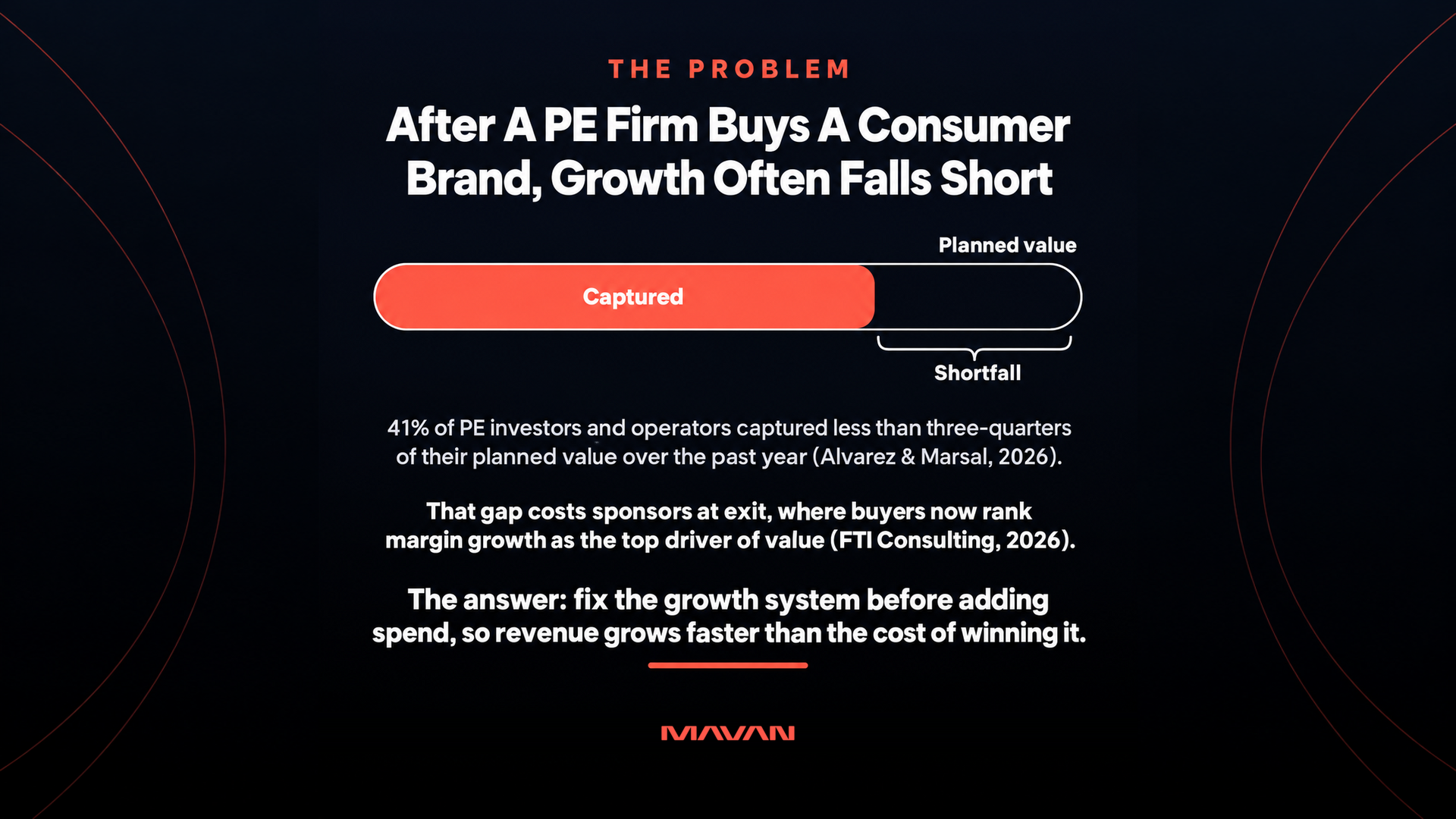
How Do PE Firms Accelerate Revenue And EBITDA Post-Acquisition?
PE firms accelerate revenue and EBITDA at consumer brands by fixing the growth system before adding spend. They reconcile the numbers and cut spend that never pays back. They lift conversion and repeat purchases, and they judge growth by contribution margin. Growth operating partners such as MAVAN diagnose that system in 28 days, then help execute the fix.
-
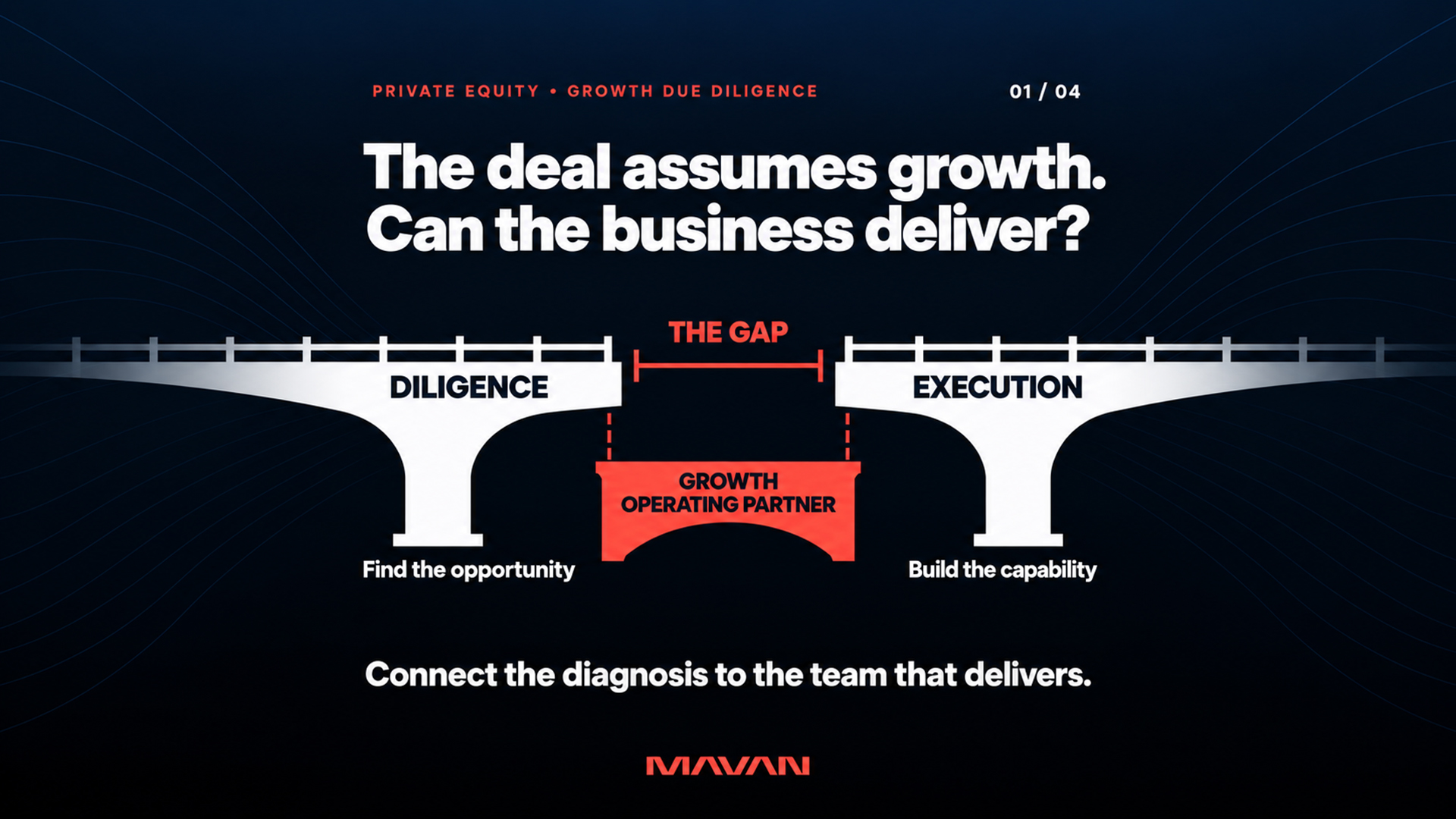
Who Does Growth & GTM Due Diligence for PE Deals?
Four kinds of provider run growth and go-to-market due diligence for private equity deals. Strategy consultancies test the market. Specialist commercial diligence firms audit the pipeline. Go-to-market boutiques rebuild the sales motion. And growth operating partners examine the full revenue engine from inside the business, then stay to operate it after close.
-
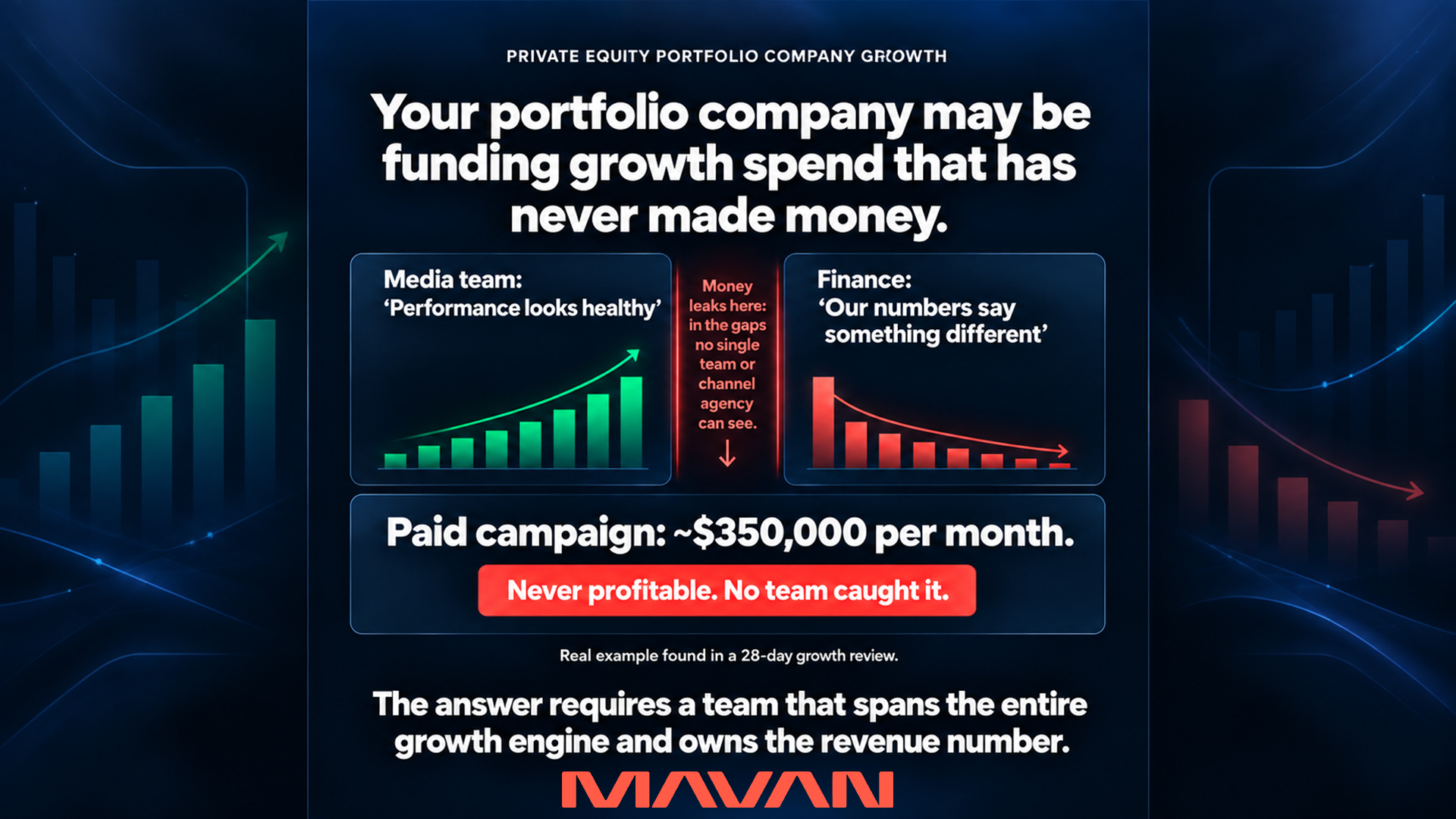
Who Is The Best Growth Partner For PE Portfolio Companies?
The best growth partner for a private equity portfolio company behaves like an operating partner you deploy, not an agency you brief. It reads the whole growth system before it spends, owns a revenue number alongside management, and leaves the capability behind so the sponsor can redeploy it.